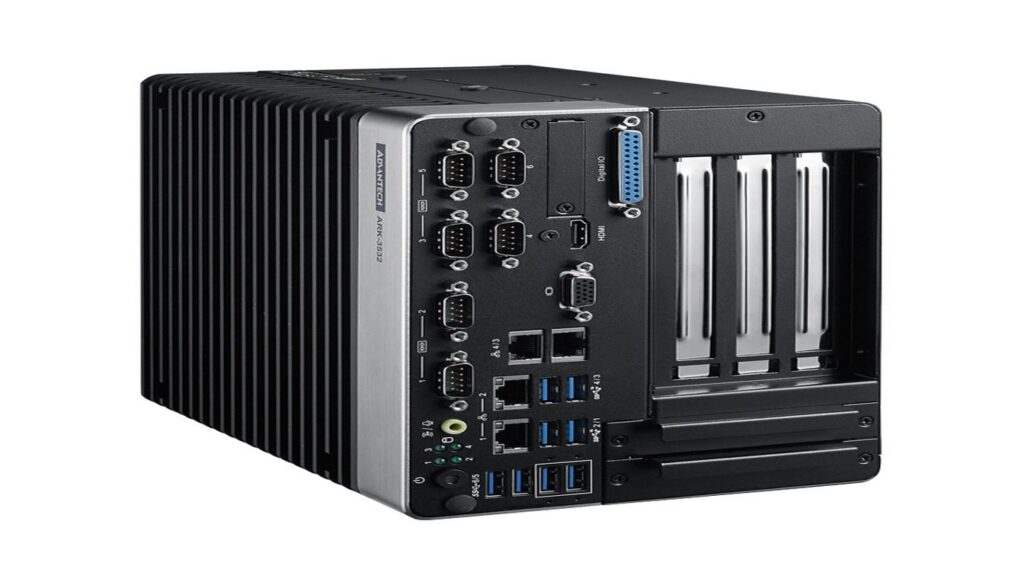
At the 2026 Embedded World exhibition in Nuremberg, Germany, Intel officially introduced the codenamed “Bartlett Lake 12P” Core (2nd Gen) performance-core processor. Designed specifically for embedded and edge workloads, this processor adopts an all-performance-core (P-core) architecture, offering up to 12 P-cores with no efficiency cores (E-cores), aiming to provide stable and efficient performance support for modern industrial scenarios.
In terms of core specifications, Bartlett Lake 12P is manufactured on Intel 7 process technology, balancing performance and power efficiency, with three TDP tiers of 125W, 65W, and 45W to suit embedded devices and edge computing scenarios with different power requirements. Performance-wise, the processor achieves single-core turbo frequencies up to 5.9GHz and all-core turbo up to 5.3GHz, paired with 36MB L3 cache and Hyper-Threading technology for 24-thread processing, efficiently handling multi-task industrial workloads.
Notably, the processor uses A0 stepping, belonging to the all-P-core variant of the Bartlett Lake-S series, distinctly different from the hybrid-core version’s stepping. The all-P-core design means all cores feature full instruction set support and high-performance execution capabilities, avoiding performance fluctuations from task scheduling in hybrid architectures—particularly important for industrial control applications requiring deterministic response.
From a market positioning perspective, Bartlett Lake 12P targets embedded scenarios with extremely high single-thread performance demands, such as high-end industrial HMIs, machine vision processing, and real-time data acquisition and analysis. Its high frequency characteristics provide clear advantages in single-thread-sensitive applications, while the multi-core configuration ensures parallel task processing capability.
For domestic embedded core board and industrial PC manufacturers, Intel’s continued release of dedicated embedded processors demonstrates that the x86 architecture maintains strong competitiveness in industrial domains. Junyi Microelectronics will continue monitoring Intel’s embedded platform technical evolution, providing customers with high-performance core boards and industrial PC solutions based on both x86 and ARM ecosystems.
Source: SMAHZ