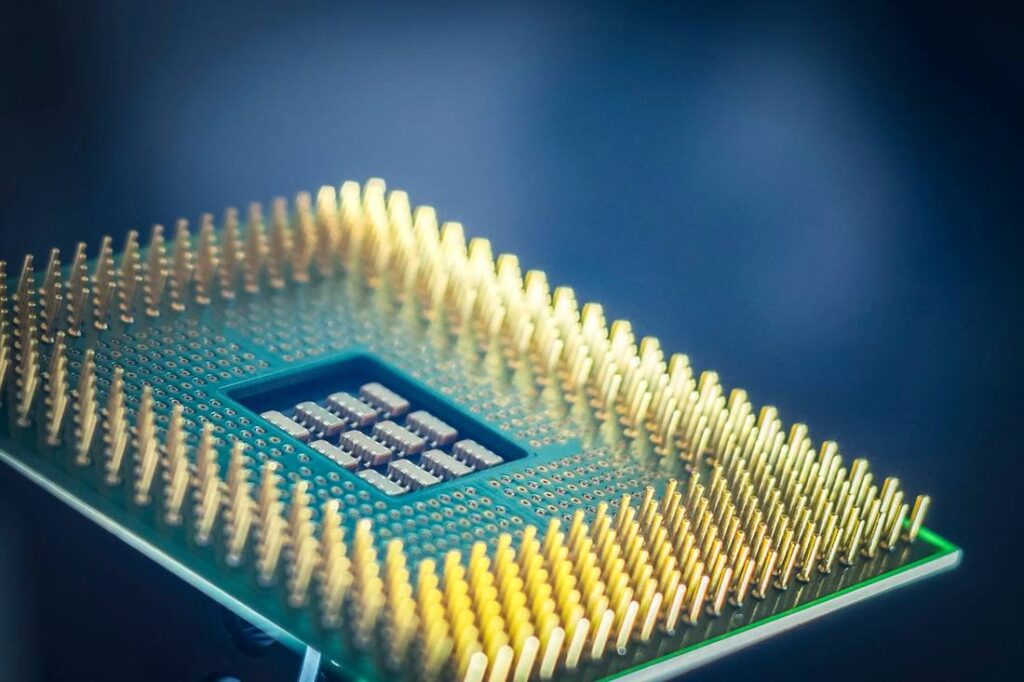
In October 2026, embedded board maker Weathink Technology released an industrial core board based on Allwinner’s T736 chip, officially positioned as “tailored for high-end industrial and edge AI applications.” The launch marks Allwinner’s new-generation industrial flagship formally entering the high-end embedded board market long dominated by Rockchip, and multi-chip competition in the embedded core board segment is clearly intensifying.
According to official disclosures, the Allwinner T736 adopts a 2x Cortex-A76 + 6x Cortex-A55 octa-core heterogeneous architecture with a RISC-V co-processor core; a built-in 4-TOPS NPU enables on-device machine learning; it supports 8K ultra-HD video hardware decoding and multi-screen heterogeneous display; its operating temperature spans the industrial wide range of -40°C to +85°C; and dual Gigabit Ethernet ports support industrial network redundancy for stable operation in harsh environments.
Notably, the competitive landscape of domestic industrial SoCs is moving toward diversification: Rockchip covers the full mid-to-high-end spectrum with the RK3568/RK3576/RK3588 and their industrial-grade J-series derivatives; Allwinner positions the T736 at high-end industrial and edge AI; Hygon, Loongson and others target trusted industrial control with indigenous instruction sets; and the RISC-V camp is accelerating its penetration. For downstream board-level vendors and end customers, a multi-platform landscape means broader selection, stronger supply resilience and better cost-performance.
From an industry-structure perspective, the standardized “core board + carrier board” form factor has become the mainstream delivery model for embedded boards — the core board integrates the processor, memory and storage, and customers only need to design a carrier board to complete whole-machine development quickly, significantly shortening time to market. As chip vendors roll out new-generation industrial products with higher compute, wider temperature ranges and built-in co-processor cores, competition in the core board market is shifting from “availability” to a comprehensive contest of ecosystem, compute power and reliability.
Junyi Microelectronics’ J-series core boards adopt a 60×60 mm board-to-board design integrating processor, memory and storage, covering models such as the J-3568, J-3588 and J-3576 to help customers complete carrier board designs quickly. Backed by in-house PCBA manufacturing and a mature solution library, Junyi supports multi-platform selection and deep customization across six dimensions: configuration, appearance, function, display, interfaces and modules.