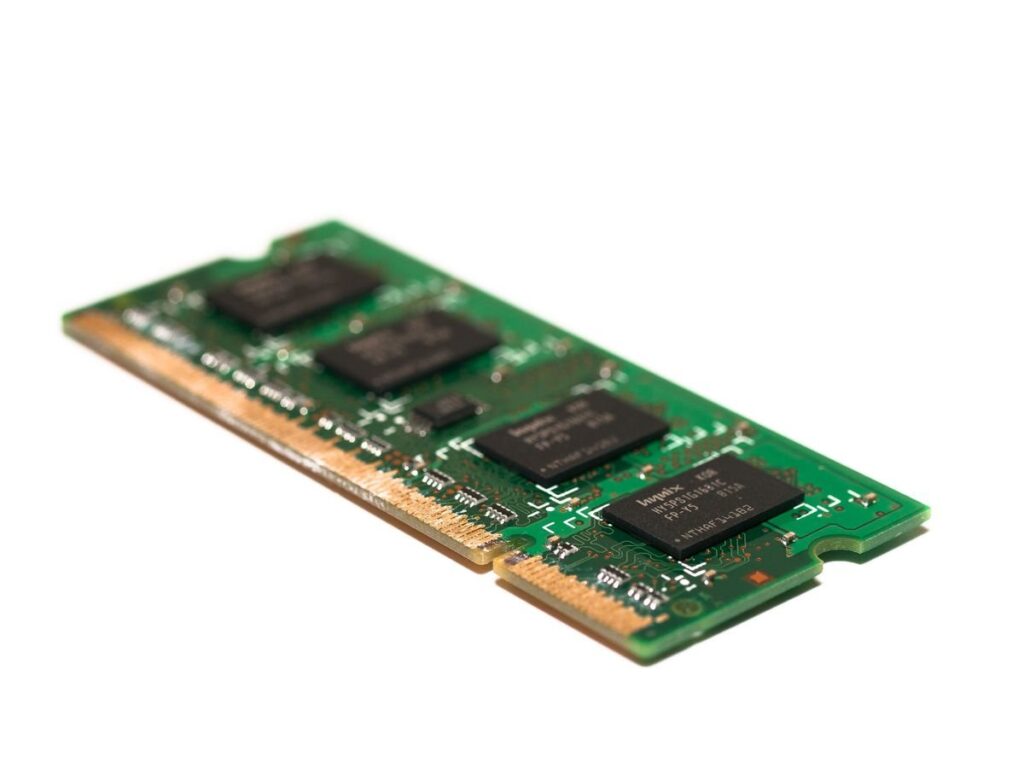
On October 28, SK hynix released its fiscal 2026 third-quarter results: quarterly revenue reached 104.62 trillion won, up 32% quarter-on-quarter and 328% year-on-year, well above the market expectation of 98.96 trillion won; operating profit came in at 83.33 trillion won, up 38% QoQ and 632% YoY, also crushing the expected 77.5 trillion won. Quarterly revenue crossed the 100-trillion-won threshold for the first time in the company’s history, with both revenue and operating profit setting new quarterly records. Following the release, SK hynix shares surged more than 8%, South Korea’s KOSPI index jumped over 6% intraday, and memory and semiconductor stocks across Asia-Pacific rallied broadly.
Looking at the operating details, the quarterly operating margin hit a striking 80% — a level of profitability rarely seen among major semiconductor companies. The engine behind the results was rising volume and prices across the memory portfolio: DRAM average selling prices climbed roughly 20% QoQ and NAND ASPs rose in the mid-20% range, with HBM4, server DDR5 and enterprise SSDs all shipping in volume. The company simultaneously unveiled an unprecedented shareholder return program — roughly 100 trillion won (about USD 75 billion) to be returned during fiscal 2026, comprising more than 30 trillion won in cash dividends and over 60 trillion won in share buybacks and cancellations. It is worth noting that quarterly net profit of 39.78 trillion won, despite growing 216% YoY, fell short of market expectations, mainly due to non-operating factors such as tax treatment related to the Kioxia investment and FX gains and losses — the underlying quality of operations remains exceptionally strong.
From the perspective of industry dynamics, the biggest signal from this report is the official confirmation of a memory “super cycle” by the market leader: SK hynix explicitly stated that the memory supply shortage will persist through 2030. On the supply side, advanced process complexity keeps rising and new fabs take years to build; on the demand side, 2027 DRAM demand is projected to grow in the mid-20% range with NAND up high-teens percent. Near-term demand is led by enterprise and consumer AI, while the medium to long term will be driven by physical AI such as autonomous driving and robotics. As hynix, Samsung and Micron collectively tilt capacity toward HBM, traditional DRAM and NAND supply is passively tightening, creating structural support for price increases. The doubts previously raised about the sustainability of AI infrastructure investment were forcefully answered by this report card.
For Junyi Microelectronics, the memory super cycle is both a cost variable and a demand signal. Junyi’s core boards J-3568/J-3576/J-3588 and K-series edge AI motherboards rely heavily on LPDDR and eMMC storage devices in hardware selection, and upstream price increases and lead-time fluctuations call for early supply planning; at the same time, the wave of AI computing moving from the cloud to the device side continues to drive deployment demand for edge computing hosts 5G-EDGE-3399Pro/AI-BOX-3588 and the compact industrial PC IPC-i5-1235U in smart manufacturing and industrial field scenarios — the memory giant’s demand-curve judgment on “physical AI” is being corroborated by the pace of edge computing adoption we observe on production lines.
Source: https://finance.sina.cn/2026-10-28/detail-iniwtxya3440891.d.html (2026-10-28)