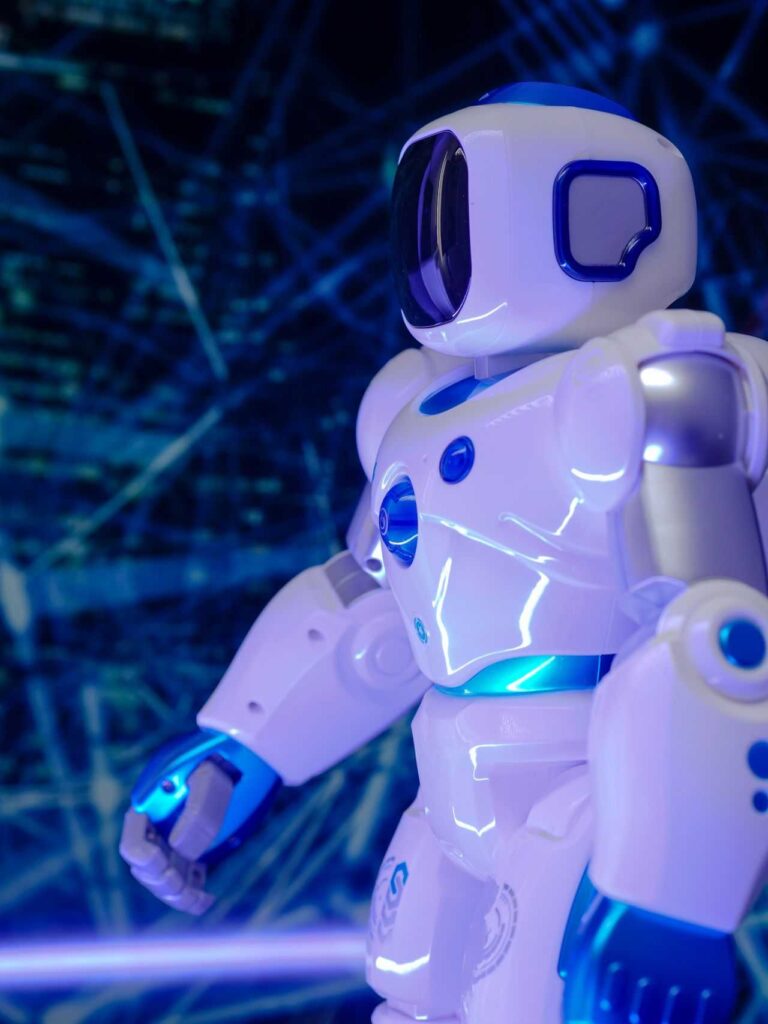
On October 22, Tesla filed its 2026 annual shareholder-meeting documents with the U.S. Securities and Exchange Commission. The cover lists four achievements of the year: more than 10 million cumulative vehicle deliveries, the launch of vision-only Robotaxi service in the United States, over 130 GWh of energy storage deployed — and “V3 Optimus is ready for high-volume production,” the company’s first written confirmation that its next-generation humanoid robot is production-ready. Almost simultaneously, OpenAI confirmed it will build humanoid robots in house, standing up a new “OpenAI Robotics” team; by October 23 its careers page listed a dozen-plus robotics roles spanning robot software and hardware, control systems, and motors and actuators, recruiting full-stack hardware, operations, systems and machine-learning engineers ahead of a demonstration prototype targeted for 2027.
Supply-chain disclosures indicate the Optimus V3 design is close to final, with production planned to start before the end of 2026; the Fremont factory line is being converted, long-term capacity is pegged at one million units per year, and Tesla reiterated its goal of 20,000 units per week by end-2027. CEO Elon Musk told analysts on the Q3 earnings call that humanoid robots will become the world’s largest industry. OpenAI, for its part, is prioritizing the robot “brain,” recruiting heavily in electromechanical actuators, sensors and motion control. In compute terms, robots follow a “brain plus cerebellum” division of labor: large models in the cloud or at the edge handle decision-making, while high-performance edge SoCs handle motion control and environment perception. Unitree’s Go2 robot dog, for example, runs on a Rockchip RK3588S core platform; the RK3588 family already enjoys a high share of the robotics market, powering humanoid, quadruped and industrial-inspection robots from Unitree, DEEP Robotics, Geek+ and Ecovacs.
From an industry perspective, leading AI companies “building bodies” marks physical AI’s shift from proof-of-concept to an all-out race, where brain capability and real-world data loops set the ceiling. Compute demand is spilling over from cloud training to on-device inference and motion control: robots need millisecond-level local response, low power draw and high reliability at the edge, making edge SoCs with strong performance-per-watt and rich industrial interfaces the “picks and shovels” of the robotics supply chain. Domestic ARM SoCs, with their mature ecosystems and cost advantages, already hold an advantageous position in the robot “cerebellum” niche — and the coming mass-production wave will further amplify demand for homegrown computing platforms.
Junyi Microelectronics’ AI-BOX-3588 edge intelligent box and K-3588 edge AI mainboard are built on the RK3588 platform with a 6 TOPS NPU, supporting RKNN/ONNX and other mainstream inference frameworks, multi-camera ingestion and CAN/RS485 industrial buses — well suited as edge compute nodes for robot perception, inspection patrols and AGV scheduling. The 5G-EDGE-3399Pro edge computing host adds 5G high-bandwidth, low-latency backhaul for “edge decision-making plus cloud coordination” deployments on mobile robots.