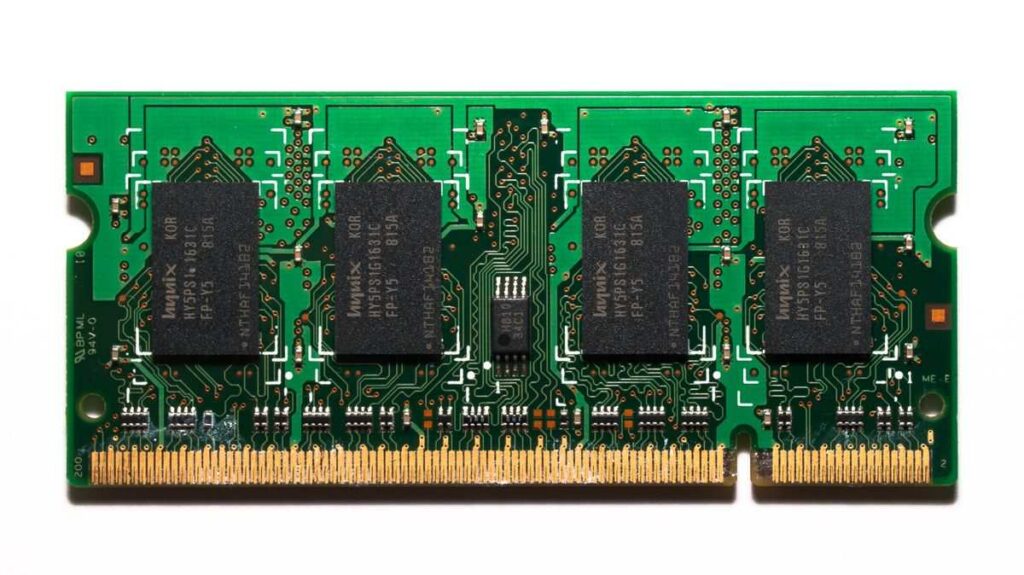
On the evening of October 29, Shenzhen Longsys Electronics (301308.SZ/09976.HK) released its 2026 third-quarter report: for the first three quarters, the company posted revenue of RMB 38.718 billion, up 131.37% year over year; net profit attributable to shareholders of RMB 14.322 billion, up 1,909.68%; and non-GAAP net profit of RMB 14.210 billion, up 2,867.95% — with both revenue and net profit hitting record highs. In the third quarter alone, revenue reached RMB 14.630 billion, up 123.74% year over year, as the boom continued its steep climb.
On the business side, Longsys kept doubling down on its in-house controller chips during the reporting period, driving their scale-up in synergy with the company’s full-stack storage capabilities, while shifting its business mix further toward high value-added segments such as enterprise-grade, automotive-grade, and edge-AI storage. Institutional research has zeroed in on exactly this: at an October 27 briefing with CITIC Construction Investment, BaoYing Fund, and Ping An Fund, ‘how controller-chip capability shapes edge-AI competitiveness’ became the central topic. On October 23 the company was also granted two new patents — including the invention patent ‘Data storage method, storage device, and computer-readable storage device’ — focused on storage performance improvement and device thermal design. The scale-up of self-developed controllers means this storage-module leader has genuinely grasped the ‘brain’ of products such as SSDs and eMMC, beyond packaging and integration.
From an industry perspective, Longsys’ nearly 29-fold surge in non-GAAP net profit is the most direct financial reflection of the AI storage super-cycle: AI servers are driving explosive demand for enterprise SSDs, and rising memory prices combined with the cost and supply autonomy of in-house controllers have given module makers far greater earnings elasticity than in the previous cycle. The path of ‘module makers moving up into controller self-design’ is rewriting the industry’s division of labor — mainland China’s storage supply chain is extending from downstream packaging and integration into upstream chip design, forming a more complete loop with the wafer-manufacturing stage. As AI PCs, AI phones, and robots ramp up, vendors holding both ‘controller design + module scale’ will capture both volume and margin.
For Junyi Microelectronics, the transmission chain of storage and controller prosperity bears directly on the cost and supply security of its system business: amid the DRAM/NAND price-up cycle, Junyi locks in key material costs through the standardized BOM and advance stocking strategy of its J-3568/J-3576/J-3588 core boards, safeguarding delivery stability for the K-series edge-AI motherboards. The scale-up of Longsys’ self-developed controllers also signals strengthening supply capability and responsiveness among domestic module makers, offering more diversified supply options for edge-AI devices that depend on large local storage — such as the 5G-EDGE-3399Pro and AI-BOX-3588 edge-computing hosts. The storage configuration strategy of the IPC-i5-1235U industrial mini-PC and touch-panel all-in-one machines likewise needs to dynamically balance performance, capacity, and cost through this super-cycle.
Source: https://m.nbd.com.cn/articles/2026-10-29/4628749.html (2026-10-29)